
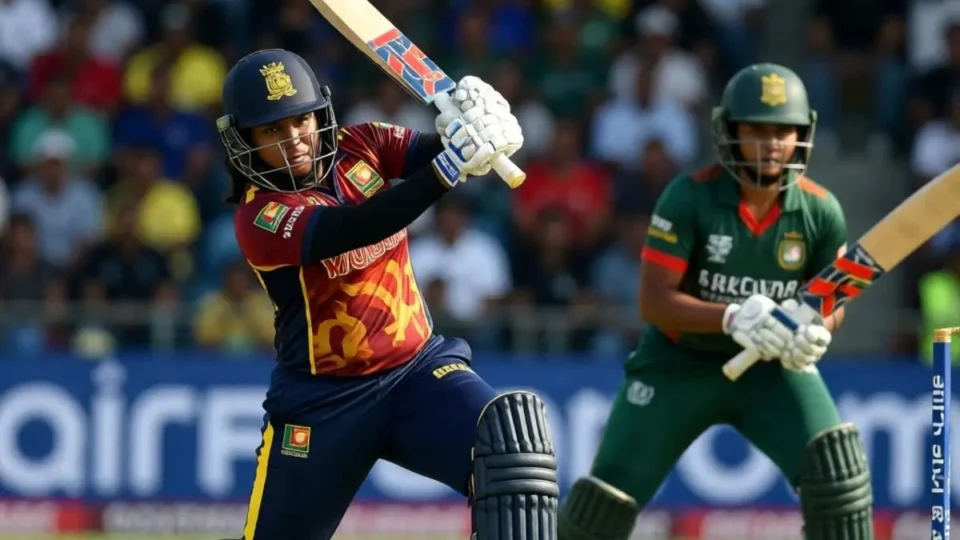
Powerful Batting Display Leads Sri Lanka to 25-Run Triumph Against Bangladesh
Sylhet, Bangladesh – In the hushed, almost reverent twilight of the Sylhet International Cricket Stadium, as the towering floodlights cast long, dramatic shadows across the lush outfield, a narrative of resurrection, of grit, and of the often-cruel, thin margins in sport was etched into the annals of women’s cricket. The scorecard, stark and unblinking, will forever record a 25-run victory for Sri Lanka over Bangladesh in the first T20I of their 2026 series. But to reduce this contest to a simple ledger of runs and wickets would be to strip it of its soul, to ignore the visceral, human drama that unfolded over 40 meticulously contested overs. This was not merely a game; it was a theatrical production in two distinct acts, a tale of one woman’s ferocious, ice-cool brilliance laying a foundation, and another’s desperate, heartbreakingly valiant effort to tear it all down, only to find the summit just beyond her reach.
The evening began with a promise that felt almost scripted. The Sylmet, a venue steeped in the romance of the sport, was bathed in the golden hour. A gentle breeze whispered across the ground as Sri Lankan captain Chamari Athapaththu, a talismanic figure whose very presence commands respect, strode out for the toss. Winning it, she didn’t hesitate: Sri Lanka would bat first. It was a declaration of intent, a belief in her batting unit’s ability to post a total that would squeeze the life out of the home side. The early exchanges, however, were a study in caution, a tense feeling-out process. Hasini Perera, elegant yet seemingly weighed down by the occasion, struggled to find her rhythm. The Bangladesh new-ball bowlers, disciplined and probing, kept her on a leash, limiting her to a painstaking 7 from 13 deliveries. Her departure, a soft dismissal that brought a collective sigh of relief from the Bangladeshi fielders, brought the in-form Imesha Dulani to the crease.
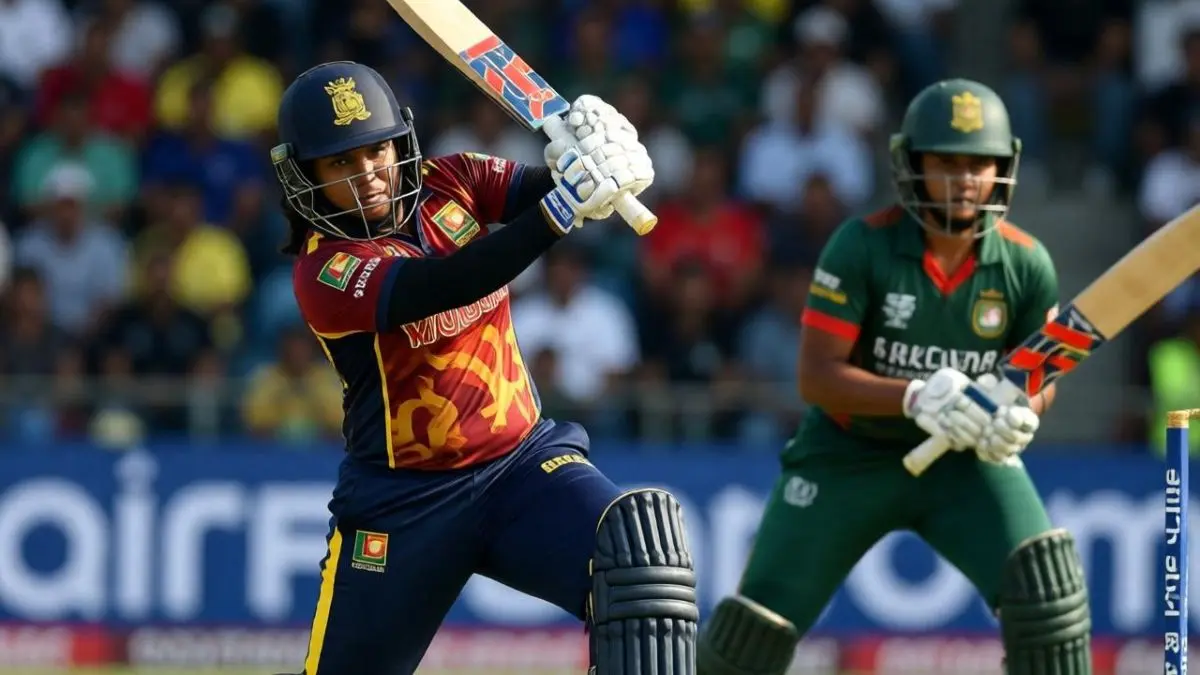
What transpired over the next hour was a masterclass in controlled, calculated risk-taking, orchestrated by the captain, Athapaththu, and her new partner, Dulani. Athapaththu, the aggressor-in-chief, was a study in poise and power. She didn’t bludgeon the bowling into submission; she dissected it with surgical precision. Her 32 from 30 balls, studded with four exquisite boundaries and a towering six that soared over the wide long-on fence, was the scaffolding around which the Sri Lankan innings grew. She was the experienced architect, choosing when to rotate strike and when to unfurl a punishing cover drive that had the purists in the sparse but vocal crowd nodding in appreciation. At the other end, Dulani was the silent accumulator, a ghost gliding through the gears. Her innings was a technical delight—soft hands defusing the spin threat, a swift transfer of weight punishing the slightest width. Their partnership was a symphony of understanding, marked by urgent singles turned into twos, and the constant, unsettling rotation of pressure back onto the fielding side. The 50-run stand came without fanfare, a simple, efficient progression that spoke of two players at the peak of their synergy. When Athapaththu finally fell, attempting one heave too many, the scoreboard read a healthy 82/2, and the platform she had built was rock-solid. It was a captain’s knock in every sense, not for its volume, but for its substance and timing.
Enter Harshitha Samarawickrama. If Athapaththu’s innings was a meticulously composed oil painting, Samarawickrama’s was a vibrant, explosive graffiti mural, full of colour, audacity, and breathtaking flair. From the very moment she took guard, there was an electricity, a palpable shift in the atmosphere. She moved with the confidence of a gunslinger, her eyes locked onto the bowler, her aura radiating pure, unadulterated intent. Dulani, perhaps inspired, morphed seamlessly from accumulator to enforcer. She reached her own fifty, a wonderfully paced 55 from 40 balls filled with seven crisp fours that peppered the point and cover boundaries. But it was the Samarawickrama show that had everyone, including the increasingly worried Bangladesh team huddle, transfixed.
Her innings of 61 from a mere 35 balls was a tempest of power and precision. It wasn’t just the numbers, staggering as they were with a strike rate of 174.28; it was the manner of their creation. She danced down the track to the spinners, not to attack, but to disrupt their length, turning potential wicket-taking deliveries into half-volleys that were dispatched with disdain. Her five fours were struck with a violence that stung the outfield, but it was her two sixes that provided the innings’ signature moments. The first, a clean, effortless loft over extra cover, was pure timing. The second, a brutal pull shot off a short ball that sailed deep into the concrete stands beyond mid-wicket, was a statement of raw, untamed power. Bangladesh’s bowlers, who had started with such hope, were suddenly bereft of answers. Their lengths wavered, their field placements became a series of desperate, reactive gambles. The partnership swelled, a raging current that swept through the Bangladeshi attack, leaving flotsam in its wake. Dulani’s subsequent dismissal was a minor tremor, forgotten instantly as Samarawickrama continued her assault. By the time the 20 overs had concluded, she remained unbeaten on 61, and the scoreboard blazed with the final total: 161/4. It was a competitive total, perhaps even a par score, but it felt like more. It felt like a psychological hammer blow, a total built on a burgeoning, almost arrogant, authority. The brief, two-run cameo from Hasimara Karunaratne before the innings closed was a mere footnote in the carnage.
The stadium lights now held full dominion over a pitch that was beginning to offer subtle turn. The challenge for Bangladesh was immense: conquer the stifling weight of a required run rate creeping above eight an over, and navigate a crafty, varied Sri Lankan bowling attack full of confidence. Their reply could not have been more emphatic. Openers Dilara Akter and Juaitya Ferdous emerged with the fearlessness of youth, playing with a freedom that was as exhilarating as it was unexpected. Their approach was simple: see ball, hit ball. Akter, the wicketkeeper-batter, was particularly severe. She tore out of the blocks, her 23 from just 14 balls a blur of flashing blades and bold strokes. Four boundaries and a monstrous six over deep square leg had the home crowd roaring, the required rate dipping with every audacious shot. Ferdous was the perfect foil, playing her own brand of aggressive cricket with three fours in her 16-run cameo. The 50-run partnership came in a flash, inside the powerplay, and the impossible suddenly seemed tantalizingly within reach. Sharmin Akhter’s brief, hesitant stay was a minor lull, but when captain Nigar Sultana Joty, the team’s rock and best batter, recorded a nought against her name—a two-ball duck that saw her trapped palpably in front—a profound silence descended on the home faithful. It was a priceless, game-altering wicket, and the pendulum, which had swung wildly, violently, in Bangladesh’s favour, creaked to a sudden, sobering halt. Sobhana Mostary and the incoming Shorna Akter were now tasked with rebuilding a chase that had, in a heartbeat, lost its engine.
What followed was the match’s central, agonizing drama. The pair adopted a policy of cautious consolidation, and the run rate, once a manageable stream, began to clot and stagnate. Sobhana’s innings was a struggle, a test of character played out in public. She laboured for 26 balls to score 16, her solitary four a rare oasis in a desert of dot balls and stifled lbw appeals. The pressure was a physical, visible entity, building with every silent over. The required rate spiralled from ten to eleven, then twelve, then thirteen an over. It was a suffocating, slow-motion collapse, but Shorna Akter was scripting a counter-narrative.
At the other end, with the calmness of a veteran and the power of a prize-fighter, Shorna Akter took the fight to the Sri Lankans. She became the solitary beacon of hope, the focal point of an entire nation’s fragile expectations. Her innings of 60 from 45 balls was a masterpiece of crisis management laced with controlled aggression. She did not panic. She targeted the shorter boundaries, dissected the field with surgical precision, and built her innings brick by brick. Her four fours were crashes of pure will, and her two sixes were gargantuan blows of defiance that momentarily pushed the dark clouds away. As Sobhana fell and the wickets of Rabeya Khan and Sultana Khatun came and went in a frantic, desperate scramble for runs, Shorna stood firm amidst the wreckage. She ran like a hunted deer between the wickets, protecting the strike, farming the bowling, willing her team over the line with a superhuman effort that transcended the game’s statistics. The equation became a simple, brutal calculation: Shorna versus Sri Lanka.
The final over arrived with Bangladesh still needing a mathematical improbability. The contest was effectively over, but Shorna’s personal battle was not. Having reached a magnificent, defiant fifty, she battled on, a lone warrior with a broken sword against a fortress. The final wicket did not fall; Bangladesh finished on 136/7. But as the Sri Lankan team converged in celebration, their initial joy was tempered by a visible, collective exhale of pure relief. Their eyes all drifted to the small, dejected figure walking back, bat tucked under her arm, her magnificent, unbeaten 60 not enough. The 25-run margin was a lie; the contest had felt much closer, a psychological knife-edge that had been tipped by Joty’s second-ball duck and Samarawickrama’s earlier pyrotechnics.
The presentation ceremony was a poignant, almost bittersweet tableau. Harshitha Samarawickrama was deservedly named Player of the Match. Her 61 not out was a whirlwind of sixes and sheer intent that, in the final analysis, constituted the exact margin of victory. Yet, as she accepted the award, a respectful glance towards the Bangladeshi dugout was inevitable. For everyone in the ground knew the true story of this match was one of twin brilliance: one knock that built a fortress of runs, and another that threw a lone, magnificent siege against it, only to find the walls just too high. As the floodlights dimmed and the Sylhet crowd filed out into the night, they carried with them not the memory of a 25-run win, but the raw, unforgettable emotion of a game that had, for its fleeting, dramatic duration, perfectly captured the beautiful, brutal poetry of cricket. The series, one sensed, had just witnessed its opening salvo, a promise of more unforgettable battles to come.
