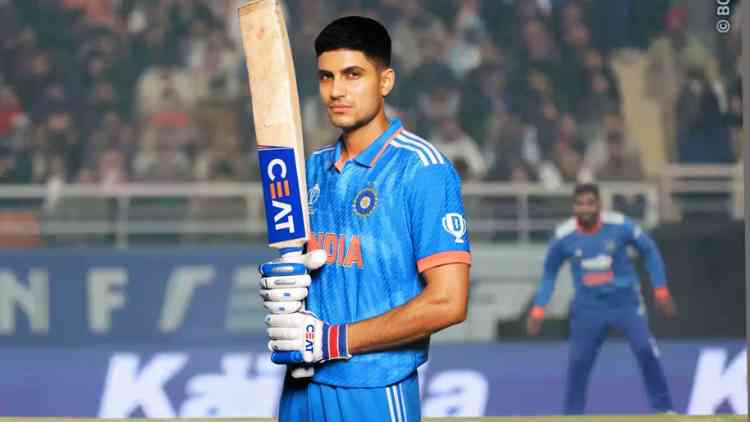
Shubman Gill’s Aggression Backfires: Faulty Shot Selection We analyze how his aggression and technical adjustments are backfiring, jeopardizing his place in the squad.
Shubman Gill’s Aggression Backfires: Faulty Shot Selection The Main Culprit in T20I Failures
Shubman Gill, a batter whose elegance has been likened to the classic giants of Indian cricket, is currently navigating his roughest patch in the shortest international format. T20 Internationals, which demand an aggressive, unceasing tempo from the first ball, have exposed a significant chasm between Gill’s immense potential and his current execution. The root cause of his recent T20I failures is not a lack of intent, but rather a perplexing case of faulty shot selection—a crucial flaw that is undoing his attempts at accelerated scoring and casting a shadow over his World Cup inclusion.
The T20 Dilemma: Aggression vs. Technique
Gill’s T20I statistics in the recent past—especially his modest run tally and low boundary count in the Powerplay overs—stand in stark contrast to the explosive performances of his contemporaries and the demands of India’s modern, aggressive T20 blueprint. While players like Abhishek Sharma are thriving with a fearless, strike-at-all-costs mentality, Gill appears to be caught in a debilitating tug-of-war between his innate classical technique and the format’s requirement for brute aggression.
The core of the problem lies in his inability to consistently transition between formats. A former NCA coach noted that Gill’s technical adjustments—specifically revamping his stance to a straighter bat path for Test match success against the incoming ball—have subtly hampered his flow in T20s. This more classical, vertical-bat approach, while a virtue in Test cricket for playing the ‘V’, makes executing the horizontal-bat shots vital for clearing the boundary in the T20 Powerplay, such as the pull and the slash over point, significantly harder.
The Problem of Mistimed Intent
The recent dismissals paint a clear picture of an opener attempting to force the pace without the foundational technical liberty that the T20 format demands. Instead of utilizing his magnificent timing to find gaps and then unleash the big shots once set, Gill has succumbed to playing shots unsuited to the specific delivery or match situation. His most recent failures have seen him try to loft deliveries that held up on the pitch, or attempt horizontal-bat shots without the necessary body alignment that his new, straighter stance makes challenging.
This manifests as mistimed aggression. He is trying to match the explosive strike-rate of his partners, often resulting in his dismissal just outside the Powerplay, or sometimes in the very first over. This is not the measured aggression seen in his best IPL seasons, where he was masterful at picking his moments and using the pace. Instead, it seems like a case of peer pressure or a feeling of needing to justify his vice-captaincy status, leading to poor decision-making at the crease.
A Pressure Cooker of Competition
The stakes are higher than ever, given the fierce competition for the opening slot. With the likes of Yashasvi Jaiswal and, most notably, Sanju Samson’s consistent, high-impact T20 performances breathing down his neck, Gill’s failures are magnified. The pressure to anchor an inning while simultaneously accelerating—a role he performs well in ODIs—seems to be forcing him into over-aggressive shot selection early in his T20I innings.
His inability to convert starts into significant scores, a characteristic of his T20I form this year, puts undue pressure on the middle order and dilutes India’s overall batting strategy. The team management, particularly Gautam Gambhir, has backed him, viewing him as a crucial long-term asset. However, the clock is ticking, and the T20 World Cup is fast approaching.
The Path to Redefinition
For Gill to reclaim his spot and justify the faith placed in him, he needs to urgently recalibrate his T20 approach. This requires more than just trying to hit harder; it demands a tactical re-alignment:
-
Temporary Technical Toggle: He must find a way to quickly switch his technique to a more open, horizontal-bat friendly stance for T20s, a challenge that is as much mental as it is physical.
-
Role Clarity: He needs to settle into a clearly defined role—whether as a boundary-hitter complementing an explosive partner, or an accumulator who accelerates from the 10th over—and abandon the desire to do both simultaneously in the Powerplay.
-
Instinct over Instruction: Most importantly, he must trust the instincts that made him an IPL star, where his stroke-play was both elegant and devastating, rather than feeling constrained by the need to conform to an ‘attack-at-all-costs’ mantra if it compromises his natural game.
Shubman Gill remains an extraordinary talent, but in T20Is, his aggression is currently outstripping his shot selection intelligence. Until he finds the right balance between the Test-match technician and the T20 marauder, his T20I career risks being stalled by a series of spectacular, yet ultimately faulty, attempts at acceleration.