
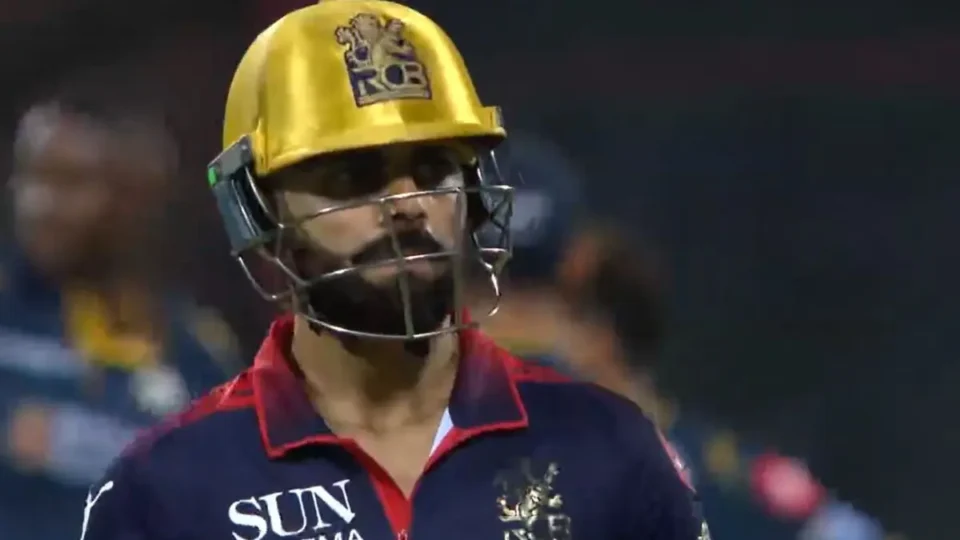
Virat Kohli’s Masterclass 81 Powers RCB to a Stunning Victory
Cricket fans witnessed a spectacle that perfectly captures why the IPL remains one of the most electrifying tournaments in the world. The clash between Royal Challengers Bengaluru (RCB) and Gujarat Titans (GT) wasn’t just another match—it was a full-blown run-fest packed with drama, individual brilliance, and moments that had fans gripping their seats until the very end. GT posted a formidable total of 205/3 in 20 overs, a score that would intimidate even the most confident chasing sides. Yet, RCB approached the target with intent, eventually sealing the game at 206/5 in just 18.5 overs, winning by five wickets with seven balls to spare.
What made this match so captivating wasn’t just the numbers on the scoreboard—it was the rhythm of the game. GT started strong, building a solid foundation with calculated aggression. Their innings had the perfect blend of caution and attack, like a chess game slowly transitioning into a high-speed sprint. On the other hand, RCB’s chase felt like a rollercoaster ride—moments of calm punctuated by explosive bursts of scoring that shifted momentum rapidly.
The energy in the stadium was palpable. Every boundary from GT raised expectations, and every RCB counterattack reignited hope. It was the kind of match where momentum didn’t just swing—it ricocheted between teams. For fans, it felt less like watching a cricket match and more like experiencing a cinematic showdown where both sides refused to back down.
Turning Points That Defined the Match
Every great match has defining moments, and this one had plenty. The first major turning point came during GT’s innings when Sai Sudharsan reached his century, anchoring the innings while accelerating at just the right moments. His ability to rotate strike and then suddenly unleash boundaries ensured GT never lost control.
However, cricket is rarely a one-sided story. RCB’s bowlers managed to restrict the damage in the death overs, preventing GT from pushing beyond 220—a detail that proved crucial later. Even a difference of 10–15 runs in T20 cricket can change the complexion of a chase entirely.
The second turning point arrived during RCB’s innings when Virat Kohli stepped into full flow. His innings wasn’t just about scoring runs—it was about absorbing pressure and redistributing it back onto the bowlers. Kohli’s calculated aggression set the tone for the chase, ensuring the required run rate never spiraled out of control.
Another decisive phase was Devdutt Padikkal’s explosive knock, which injected fresh momentum into the chase. When partnerships began to build, GT seemed to lose their grip, and their bowling attack struggled to contain the scoring rate.
Finally, the closing moments showcased RCB’s composure. Unlike many high-pressure chases that collapse near the finish line, RCB displayed maturity and confidence, crossing the target with authority. It wasn’t just a win—it was a statement of intent.
Gujarat Titans’ Innings Breakdown
Sai Sudharsan’s Spectacular Century
If there was one performance that stood out in GT’s innings, it was Sai Sudharsan’s brilliant century. Scoring 100 off 58 balls, he played an innings that was as elegant as it was effective. His knock featured 11 fours and 5 sixes, showcasing a perfect blend of classical stroke play and modern-day power hitting. Watching Sudharsan bat felt like witnessing an artist at work—each shot carefully crafted, yet delivered with effortless precision.
What made his century particularly special was the context. T20 cricket often rewards reckless aggression, but Sudharsan demonstrated that timing and placement can be just as devastating as brute force. He didn’t rush his innings; instead, he built it layer by layer. Early on, he focused on strike rotation, ensuring the scoreboard kept ticking. As he settled in, he gradually expanded his range, targeting gaps and exploiting field placements.
His partnership with Shubman Gill, who added a steady 32 runs, provided the perfect platform. Together, they laid the groundwork for a big total. Sudharsan’s ability to accelerate in the latter stages ensured GT maintained a high run rate without losing wickets unnecessarily.
This innings also highlighted his mental strength. In high-pressure games, it’s easy for players to lose focus or get carried away. Sudharsan, however, remained composed throughout, pacing his innings like a seasoned veteran. His century wasn’t just about runs—it was about control, discipline, and understanding the rhythm of the game.
Even though GT eventually lost, Sudharsan’s knock will be remembered as one of the finest individual performances of the season.
Support Cast and Strategic Batting
While Sai Sudharsan’s century grabbed the headlines, cricket is, at its core, a team sport. GT’s total of 205/3 was the result of collective effort, with several players contributing crucial runs at key moments. Shubman Gill’s 32 off 24 balls may not seem extraordinary on paper, but it played a vital role in stabilizing the innings during the early overs. His approach was measured, ensuring that GT didn’t lose early wickets while still maintaining a healthy scoring rate.
Then came Jos Buttler, whose quickfire 25 off 16 balls added momentum during the middle overs. Buttler’s ability to find boundaries under pressure gave GT the push they needed to transition from a steady start to an aggressive finish. His innings acted as a bridge between consolidation and acceleration.
Washington Sundar and Jason Holder provided the finishing touches, remaining unbeaten with contributions that ensured GT crossed the 200-run mark. Their late flourish was like the final brushstrokes on a masterpiece, adding depth and completeness to the innings.
Strategically, GT’s batting approach was well-balanced. They avoided unnecessary risks early on, built partnerships, and then accelerated at the right moments. This method is often considered the blueprint for success in T20 cricket.
However, one could argue that they left a few runs on the table. In hindsight, pushing harder in the final overs might have taken them closer to 220—a score that could have significantly increased their chances of defending.
Still, their batting performance was impressive, setting a challenging target that demanded excellence from RCB’s batting lineup.
Virat Kohli’s Masterclass Under Pressure
When the target is over 200 in a T20 match, the margin for error becomes razor-thin. Every dot ball feels heavier, every wicket carries more weight, and every batter is expected to deliver something extraordinary. In the middle of this high-pressure scenario stood Virat Kohli, orchestrating the chase with a blend of experience, precision, and controlled aggression. His innings of 81 runs off 44 balls, decorated with 8 fours and 4 sixes, was not just impactful—it was deeply calculated, almost like a chess grandmaster anticipating moves several steps ahead.
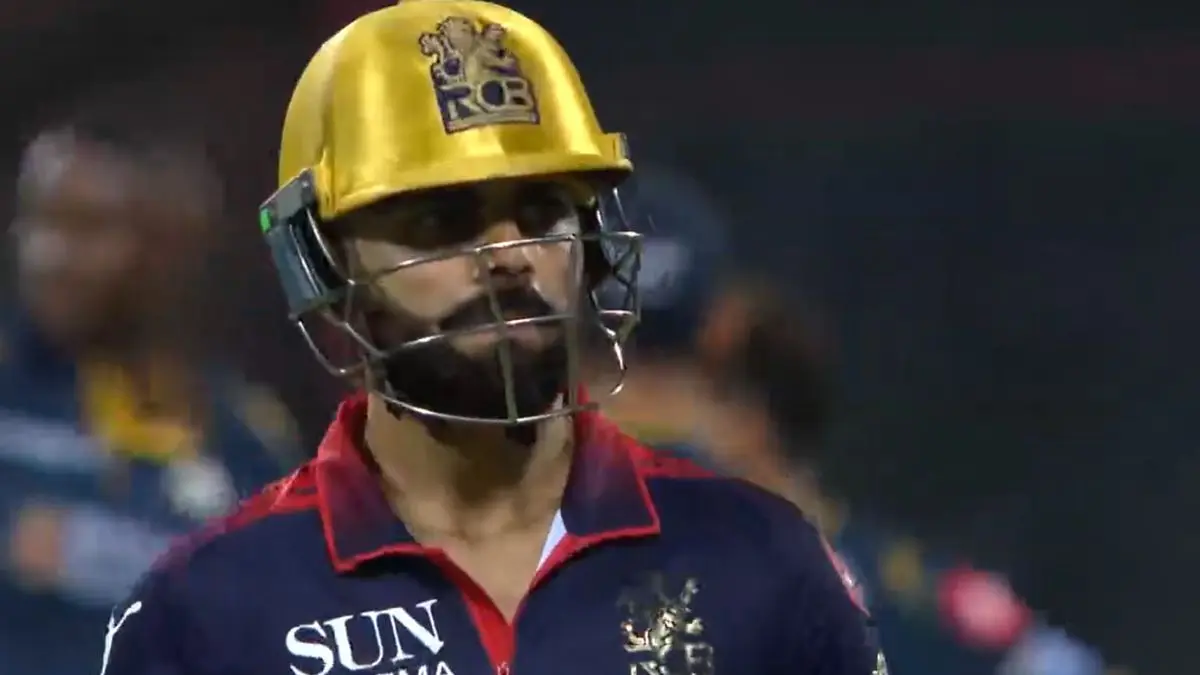
Kohli’s approach was fascinating to watch. He didn’t come out swinging wildly; instead, he assessed the pitch, gauged the bowlers, and then gradually shifted gears. Early in his innings, he focused on rotating the strike, ensuring that the scoreboard kept moving without unnecessary risks. This ability to maintain momentum without panic is what separates elite players from the rest. Once he found his rhythm, the boundaries began to flow effortlessly.
What made Kohli’s knock even more valuable was the timing of his aggression. He targeted specific bowlers, capitalized on loose deliveries, and maintained a strike rate of over 180, which is remarkable in a chase of this magnitude. His innings acted as the backbone of RCB’s pursuit, giving confidence to the players around him.
Beyond the numbers, there was a psychological edge to his batting. Every boundary he struck seemed to chip away at GT’s confidence, shifting the pressure back onto the bowlers. It’s almost as if Kohli was not just chasing runs—he was dictating the narrative of the match.
In high-scoring chases, teams often crumble under pressure, but Kohli ensured that RCB stayed composed. His dismissal could have triggered a collapse, but by then, he had already done the heavy lifting, leaving the team in a strong position to finish the job.
Devdutt Padikkal’s Explosive Contribution
While Kohli laid the foundation, Devdutt Padikkal provided the fireworks that turned the chase into a spectacle. Scoring 55 runs off just 27 balls at an astonishing strike rate of over 200, Padikkal’s innings was the kind that shifts momentum instantly. If Kohli was the anchor, Padikkal was the storm—unpredictable, powerful, and impossible to ignore.
Padikkal’s approach was refreshingly fearless. From the moment he walked in, he looked intent on attacking. He didn’t allow the bowlers to settle, consistently putting them under pressure with aggressive stroke play. His sixes were clean and commanding, while his boundaries found gaps with precision. It felt like every shot carried intent, as if he had already visualized the outcome before executing it.
One of the most impressive aspects of Padikkal’s innings was his ability to complement Kohli. Instead of competing for dominance, the two formed a partnership that balanced caution and aggression perfectly. While Kohli ensured stability, Padikkal accelerated the scoring rate, ensuring that the required run rate never became a burden.
This partnership was the turning point in the chase. It shifted the game’s momentum decisively in RCB’s favor, forcing GT to rethink their strategies. Bowlers who had started confidently suddenly looked uncertain, experimenting with variations that often backfired.
Padikkal’s innings also highlighted the importance of intent in T20 cricket. Sometimes, it’s not just about technique—it’s about mindset. His fearless approach sent a clear message: RCB wasn’t just chasing the target; they were chasing it on their own terms.
Key Player Performances Compared
Batting Statistics and Impact Analysis
Cricket is a game of numbers, but numbers alone rarely tell the full story. When comparing the performances of key players from both sides, it becomes clear that impact matters just as much as statistics. Both teams had standout performers, yet the way those performances influenced the match varied significantly.
Below is a comparison of the top बल्लेबाज from both teams:
| Player | Team | Runs | Balls | |||
|---|---|---|---|---|---|---|
| Sai Sudharsan | GT | 100 | 58 | |||
| Virat Kohli | RCB | 81 | 44 | |||
| Devdutt Padikkal | RCB | 55 | 27 | |||
| Shubman Gill | GT | 32 | 24 |
At first glance, Sudharsan’s century appears to be the standout performance—and in many ways, it was. However, when you factor in the match situation, Kohli and Padikkal’s contributions arguably had a greater impact. Chasing a target requires not just skill but also composure under pressure, and both RCB batters excelled in this regard.
Strike Rates, Boundaries, and Game Influence
Strike rate often serves as a key indicator in T20 cricket, and in this match, it played a crucial role. While Sudharsan maintained an impressive strike rate of 172.41, RCB’s batters operated at even higher levels. Padikkal’s strike rate of over 200 stands out, reflecting his aggressive intent and ability to dominate the bowlers.
Boundaries were another decisive factor. RCB’s batters consistently found the ropes, reducing the pressure of required runs. It’s often said that in T20 cricket, boundaries are like shortcuts—they help you reach your destination faster while conserving energy. RCB used these shortcuts effectively.
Another important aspect was the timing of these boundaries. GT scored consistently throughout their innings, but RCB’s boundaries came at moments that shifted momentum. Whether it was breaking a tight over or accelerating after a wicket, these moments made a significant difference.
Ultimately, while both teams had exceptional individual performances, RCB’s players managed to align their efforts more effectively with the demands of the match situation. That alignment turned potential into victory.
Bowling Analysis from Both Sides
Gujarat Titans’ Bowling Struggles
Defending a total above 200 should ideally put the bowling team in a strong position. However, GT’s bowling attack struggled to contain RCB’s relentless batting lineup. Despite having experienced bowlers, they found it difficult to maintain consistency, often leaking runs at crucial moments.
One of the main issues was their inability to build pressure. In T20 cricket, pressure is often created through dot balls and tight overs. GT, however, allowed too many scoring opportunities, enabling RCB to maintain a high run rate throughout the chase.
Their variations, which are usually a strength, didn’t quite work as intended. Slower balls and yorkers either missed their mark or were picked up easily by the batters. It’s almost like RCB’s batters had decoded their strategies, anticipating deliveries and responding accordingly.
Field placements also came into question. At times, gaps in the field allowed easy boundaries, further easing the pressure on RCB. In a high-scoring game, even small lapses can have significant consequences, and GT experienced this firsthand.
RCB’s Tactical Bowling Execution
While RCB’s bowlers conceded over 200 runs, their performance wasn’t without merit. In fact, their ability to restrict GT during the death overs proved to be a crucial factor in the outcome of the match.
Bowlers like Mohammed Siraj and Josh Hazlewood delivered key breakthroughs at important moments. These wickets prevented GT from accelerating further, ensuring that the target remained within reach.
RCB’s bowlers also showed better adaptability. They adjusted their lengths, mixed up their deliveries, and focused on minimizing damage rather than chasing wickets recklessly. This pragmatic approach helped them contain GT during critical phases.
