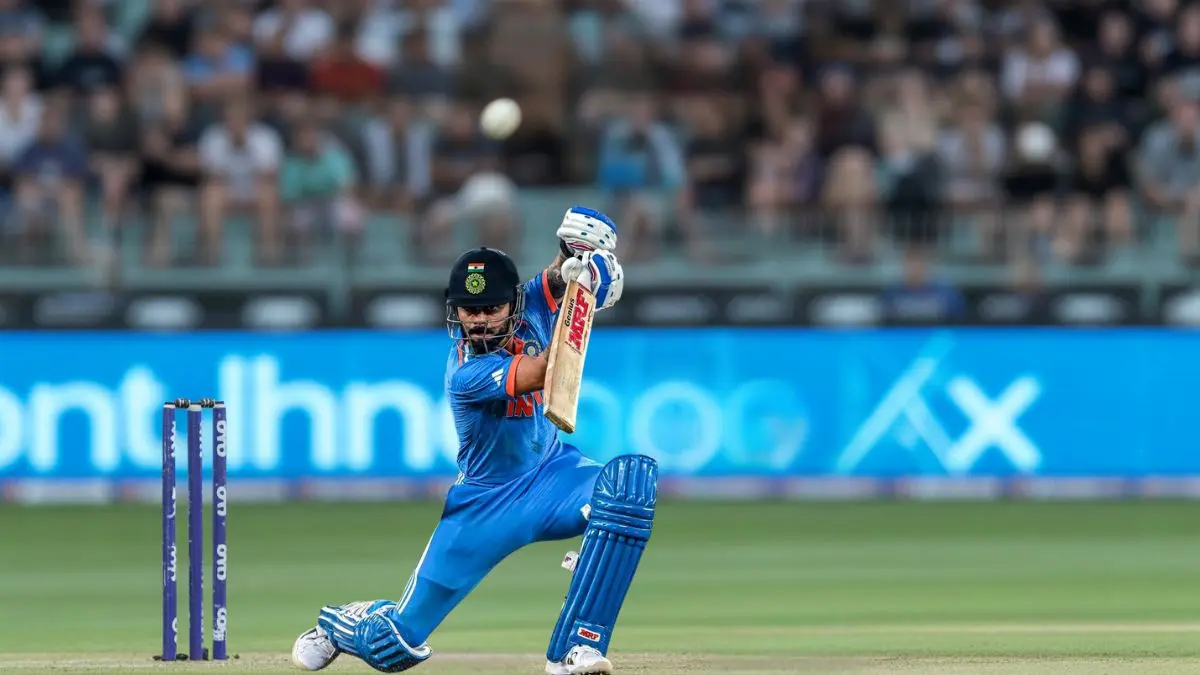
IND vs NZ: Kohli Hit 124 but India Lose ODI Series India suffers a Historic Series Loss at Holkar Stadium
The atmosphere at the Holkar Stadium, Indore was electric, buzzing with the kind of anticipation that only a series decider can generate. Fans had turned up in droves, hoping to witness another Indian dominance on home soil. However, what unfolded on that Sunday evening of January 18, 2026, was a script twist few saw coming. Despite a heroic century from the modern-day master, Virat Kohli, India fell short, handing New Zealand a Historic Series Loss—their first-ever bilateral ODI series victory in India.
This match wasn’t just about the result; it was a rollercoaster of emotions, brilliant individual performances, and a stark reminder that in cricket, a collective effort often trumps individual brilliance. Let’s dive deep into the key moments that defined the India vs New Zealand 3rd ODI.
A Kiwi Masterclass: Mitchell and Phillips Shine
The match began with India winning the toss and opting to bowl, a decision that seemed correct initially as the Indian pacers reduced the visitors to a precarious 58/3. However, the middle overs belonged entirely to the Black Caps. Daryl Mitchell and Glenn Phillips joined forces to dismantle the Indian bowling attack with a partnership that changed the complexion of the game.
Mitchell, continuing his dream run, anchored the innings with a sublime 137 runs, while Phillips provided the explosive firepower at the other end. Phillips shifted gears effortlessly, smashing a 106 off just 88 balls. Their record-breaking 219-run stand for the fourth wicket was a masterclass in calculating risk and seizing momentum. They didn’t just rebuild; they dominated, propelling New Zealand to a daunting total of 337/8. For the Indian bowlers, it was a harsh lesson in resilience, as the visitors capitalized on every loose delivery.
Top Order Collapse and the King’s Arrival
Chasing 338 was never going to be easy, even on a batting-friendly track like Indore. India needed a flying start from their openers, Rohit Sharma and Shubman Gill. Unfortunately, both departed early, falling cheaply within the powerplay. The scoreboard read a worrying 71/4, and the silence in the stadium was palpable.
It was in this crisis that Virat Kohli walked out, shouldering the hopes of a billion fans yet again. True to his reputation as the “Chase Master,” Kohli absorbed the pressure, stitching a vital partnership with Nitish Kumar Reddy to steady the ship. While wickets crumbled around him, Kohli stood firm, constructing his innings with a blend of classic drives and aggressive running between the wickets.
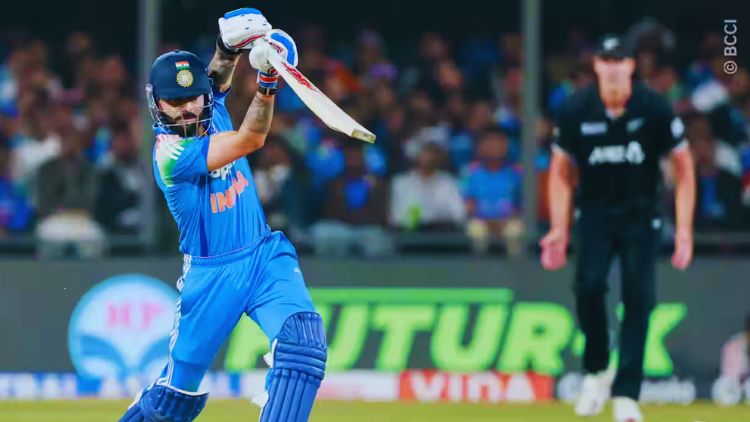
The Fightback: Kohli’s 124 and Rana’s Cameo
As the required run rate climbed, Kohli shifted into overdrive. He brought up his 54th ODI century, a knock of pure class and determination. Scoring 124 Runs off 108 balls, he kept India in the hunt when all seemed lost. His innings was a reminder of his enduring class, filled with ten exquisite boundaries and three towering sixes.
But Kohli wasn’t alone in the fight. Young Harshit Rana played a fearless counter-attacking knock that ignited a glimmer of hope. Walking in with the team in dire straits, Rana blasted a quick-fire 52 off 43 balls, showing he is more than capable with the bat. The duo added 99 runs, momentarily making the impossible look achievable. For a brief period, the Holkar Stadium believed a miracle was unfolding.
Heartbreak in Indore
However, the mountain proved too steep to climb. The dismissal of Kohli in the 46th over was the final nail in the coffin. Trying to clear the boundary to keep up with the asking rate, he was caught in the deep, and with him went India’s chances. The tail couldn’t wag for long, and India was eventually bowled out for 296, falling short by 41 runs.
While the loss was painful, it highlighted some glaring issues in the middle order and the bowling department’s inability to break big partnerships. On the flip side, New Zealand played like true champions, executing their plans to perfection and holding their nerve in crunch moments.
IND vs NZ: Kohli Hit 124 but India Lose ODI Series
The India vs New Zealand 3rd ODI will be remembered for many things: the Historic Series Loss, the incredible partnership between Daryl Mitchell and Glenn Phillips, and the fighting spirit of Virat Kohli. While the result didn’t go India’s way, the match was a testament to the competitive nature of ODI cricket.
As Rohit Sharma and his men reflect on this series, the emergence of talents like Harshit Rana offers a silver lining. For now, credit must go to New Zealand for conquering the final frontier and etching their names in history books.
Tactical Breakdown: Where India Lost the Plot
While the scoreboard reflects the final margin of victory, the India vs New Zealand 3rd ODI was truly decided in the middle overs of the first innings. The Holkar Stadium, Indore is renowned for its small boundaries and flat deck, a paradise for batters. However, it also demands discipline from bowlers—something the Indian unit lacked during the crucial phase when Daryl Mitchell and Glenn Phillips were at the crease.
The Indian spinners, usually the team’s trump card on home soil, found themselves neutralized by the Kiwi duo’s aggressive sweep shots and smart rotation of strike. Phillips, in particular, disrupted the lengths of the Indian wrist spinners, forcing Rohit Sharma to constantly shuffle his field placements. This defensive mindset allowed New Zealand to milk singles effortlessly between boundaries, keeping the run rate ticking over six an over without taking undue risks.
Furthermore, the Indian seamers struggled with the old ball. Once the swing dried up after the first ten overs, the attack looked pedestrian against two set batsmen. The lack of yorkers at the death was glaring, allowing New Zealand to plunder 90 runs in the final 10 overs—a differential that ultimately proved to be the winning margin.
The Top Order Crisis: Sharma and Gill
For India to chase down 338, the template has always been a solid foundation. The failure of the opening pair was a critical blow. Rohit Sharma, who has often been the destroyer-in-chief at Indore, looked rusty. His dismissal—a mistimed pull shot that found the fielder at mid-wicket—exposed a slight reflex issue against high pace, a concern that has been whispering in cricketing circles recently.
On the other hand, Shubman Gill, touted as the heir apparent to Kohli’s throne, had a series to forget. In this decisive match, his tentativeness outside the off-stump was his undoing. Gill’s early departure meant the middle order was exposed to the moving ball much earlier than anticipated. This puts immense pressure on the management to rethink their top-order strategy. Is it time to tweak the approach, or was this just a bad series? Regardless, the reliance on the top three to do the bulk of the scoring is a double-edged sword that hurt India badly in this Historic Series Loss.
Virat Kohli: The Tragic Hero
It is often said that cricket is a team game, but Virat Kohli frequently finds himself fighting lone battles. His knock of 124 Runs was not just about statistics; it was a clinic on how to construct an ODI innings under pressure.
Walking in at 71/4, Kohli didn’t panic. He spent the first 20 balls assessing the pace of the wicket, content with nudging singles. Once he got his eye in, the transformation was spectacular. His cover drive off the back foot against the pace of Lockie Ferguson was the shot of the match—a statement that the King was in the zone.
What stood out most was his fitness. Even after crossing the 90-run mark, Kohli was sprinting hard twos, testing the fitness of his younger partners. However, the tragedy of this innings lay in the lack of support. Cricket history is littered with centuries in losing causes, and this one will sting Kohli more than most. It was a knock that deserved a series win, yet it ended as a footnote in a New Zealand victory.
The Silver Lining: Harshit Rana
If there is a positive to harvest from the debris of this defeat, it is the emergence of Harshit Rana. Coming into the side as a bowling all-rounder, Rana showed he has the temperament for the big stage.
When he walked out to bat, India required over 10 runs an over. Most tail-enders would swing blindly, but Rana played proper cricketing shots. His lofted straight drive for six over long-off showed a high elbow and technical correctness. His partnership of 99 runs with Kohli kept the fans at Holkar Stadium, Indore on the edge of their seats.
Rana also chipped in with the ball earlier, picking up two crucial wickets when the New Zealand openers were threatening to run away with the game. In a team desperately searching for a seam-bowling all-rounder who can genuinely bat, Rana’s performance is a massive tick mark for the selectors.
Why This is a Historic Series Loss
The term “historic” is often thrown around loosely in sports, but this defeat truly warrants the label. New Zealand has toured India for decades, often boasting legendary players like Stephen Fleming, Daniel Vettori, and Brendon McCullum. Yet, none of those teams managed to secure a bilateral ODI series win on Indian soil.
This New Zealand side, led by an astute captain and powered by the resilience of players like Daryl Mitchell and Glenn Phillips, achieved the unthinkable. They didn’t just win; they outplayed India in their own conditions. They played spin better than the Indians played pace. They fielded with higher intensity, saving 15-20 runs that proved crucial in the context of the game.
For India, this loss breaks a fortress-like aura at home. It sends a signal to the rest of the cricketing world that India is beatable in their own backyard if you have the patience and the tactical acumen to exploit their weaknesses.
The Road Ahead
As the dust settles on this India vs New Zealand 3rd ODI, the Indian think-tank has some tough questions to answer. The rigidness in batting positions, the lack of bowling depth, and the dependency on individual brilliance are issues that need immediate addressing.
With major tournaments on the horizon, Rohit Sharma and the management cannot afford to sweep this result under the carpet. They need to analyze why the team crumbles when the top order fails and why the bowling attack lacks teeth in the middle overs.
Meanwhile, New Zealand will fly home with their heads held high, having conquered one of the toughest frontiers in world cricket. For the fans, despite the heartbreak, the match was a reminder of why we love this game—the uncertainty, the individual brilliance of stars like Virat Kohli, and the drama that unfolds until the very last ball.