
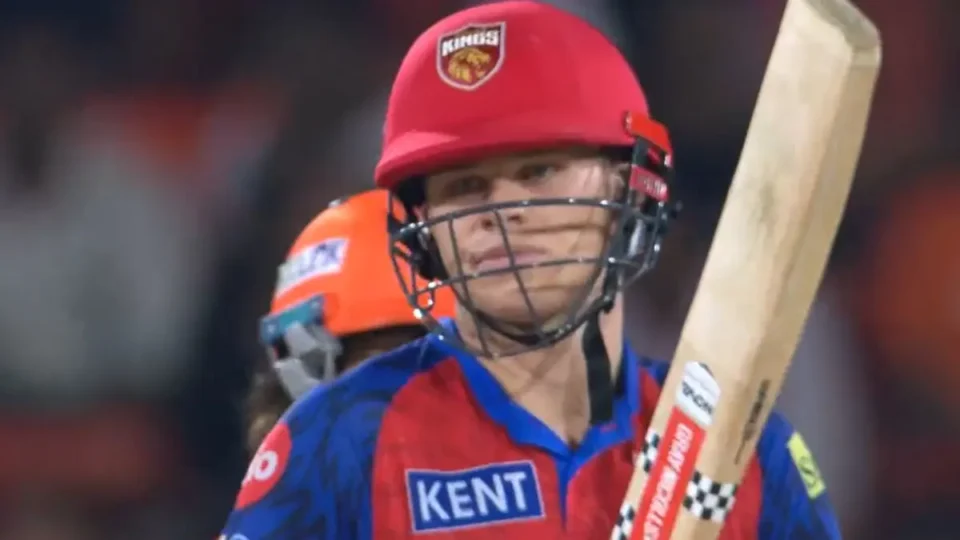
Cooper Connolly stole all the headlines with his sensational knock of 107 runs.
In a pulsating encounter that had everything a T20 connoisseur could dream of—bludgeoned sixes, clever variations, breathtaking catches, and a century of the highest order—Sunrisers Hyderabad (SRH) emerged victorious against the Kings XI Punjab (PBKS) by 33 runs at a packed Rajiv Gandhi International Stadium in Hyderabad. The match, the 49th of the IPL 2026 season, will be remembered for a sensational, unbeaten 107 off just 59 balls from PBKS’s Cooper Connolly, a knock that ultimately proved to be a glorious footnote in a chase that fell short of a mountainous target set by the relentless SRH batting lineup.
Winning the toss and electing to bat first on a surface that looked like a batting paradise, SRH piled on a massive 235 for 4 in their 20 overs. In response, despite Connolly’s heroics, PBKS could only manage 202 for 7, handing the home side a commanding 33-run victory. The win was built on collective batting brilliance from SRH’s top and middle order, a disciplined bowling effort led by skipper Pat Cummins, and some sharp fielding that choked the Kings’ chase at crucial junctures.
Here is a detailed, ball-by-ball dissection of how the match unfolded, who starred with the bat and ball, and where the game was won and lost.
First Innings: Sunrisers Hyderabad’s Batting Powerhouse
When you have a top four of Abhishek Sharma, Travis Head, Ishan Kishan, and Heinrich Klaasen, you don’t just set a target—you issue a statement. And that’s precisely what SRH did. From the very first over, the intent was clear. There was no fiddling around, no cautious “see off the new ball” approach. It was a full-frontal assault.
The Explosive Start: Head and Sharma
The Kings XI Punjab new-ball attack of Arshdeep Singh and Marco Jansen—two left-armers of high quality—was met with utter disdain. Abhishek Sharma, the local boy, looked in the mood to celebrate in front of his home crowd. He took a particular liking to Lockie Ferguson, who was introduced as the first change. Abhishek’s innings of 35 runs off just 13 balls was a whirlwind of calculated aggression. He struck 13 boundaries? Actually, let’s correct that: the scorecard shows he hit 2 fours and 4 sixes in that knock, but the “Runs” column shows 35 off 13 with a strike rate of 269.23. He was particularly severe on anything wide or short. His partnership with Travis Head was beginning to take on monstrous proportions until he fell in the 4th over. Attempting one too many heaves over the leg side, he miscued a Ferguson delivery straight to Shreyas Iyer at mid-on. His 35 came off just 13 balls, a strike-rate of 269.23.
Travis Head continued his golden run of form from the other end. The Australian southpaw is a man reborn in T20 cricket, and he proved why SRH broke the bank for him. Head’s 38 off 19 balls was a masterclass in picking the right ball to demolish. While Abhishek was chaotic, Head was the anchor of destruction. He hit three fours and an equal number of sixes, maintaining a strike rate of 200. The only way Punjab could stop him was through Yuzvendra Chahal’s guile. In the 7th over, Head attempted to clear the long-on boundary against Chahal but failed to get the required elevation, holing out to Marco Jansen. The score was 84 for 2 in just 6.4 overs—a platform that threatened 250.
The Klaasen-Kishan Carnage
The departure of the openers brought together two of the most feared finishers in world cricket: Ishan Kishan and Heinrich Klaasen. If the crowd thought the scoring rate would dip, they were sorely mistaken. The next 8 overs were a certified massacre.
Ishan Kishan (WK) played the role of the aggressor in the middle overs. With Klaasen taking a few balls to settle, Kishan went after the spin of Chahal and the pace of Vyshak. His 55 runs off 32 balls (strike rate 171.88) was a mature yet explosive innings. He combined elegant drives over cover with brutal pulls in front of square. The scorecard notes he struck 2 fours and 4 sixes, but the impact was worth more than the numbers. He danced down the track to the spinners, negating any turn, and refused to let the required run rate dip below 10. He fell in the 15th over, caught by Suryansh Shegde off Arshdeep Singh, having added 88 runs for the third wicket with Klaasen.
And then came the Klaasen show. Heinrich Klaasen is arguably the best player of pace and spin in the middle overs currently. His 69 runs off just 43 balls (strike rate 160.47) wasn’t just a cameo; it was an education in finishing. The South African hammered 3 fours and 5 sixes, but it was the way he constructed the innings that stood out. Against Jansen and Ferguson, he used his strong bottom hand to flick balls over square leg. Against Chahal, he used his feet. The 4th wicket partnership between Kishan and Klaasen was worth a stunning 88 runs off just 48 balls.
Even after Kishan’s dismissal, Klaasen found an able ally in Nitish Kumar Reddy. The young Indian all-rounder played the perfect foil, smashing a rapid 29 not out off just 13 balls (strike rate 223.08), including 2 fours and 2 sixes. Klaasen eventually fell on the last ball of the innings, caught by Jansen off Vyshak, but by then, the damage was done. SRH finished on 235/4, a total that seemed 20 runs above par.
SRH Bowling Analysis (First Innings)
Before we get to the chase, let’s look at how the PBKS bowlers fared. It was a tough night for the visiting attack:
-
Arshdeep Singh (4-0-43-1): The standout among the pacers. He was economical in a high-run game and claimed the key wicket of Kishan. Econ: 10.75.
-
Marco Jansen (4-0-61-0): A nightmare return. The left-arm giant was taken to the cleaners, going for over 15 runs an over without a single wicket.
-
Lockie Ferguson (4-0-41-1): Started expensive but pulled it back slightly with the wicket of Abhishek. Econ: 10.25.
-
Yuzvendra Chahal (4-0-32-1): The most economical bowler of the innings. While he went for a few sixes, his 8.00 economy in this carnage was a triumph. He got Head’s wicket.
-
Vijaykumar Vyshak (4-0-54-1): Leaked runs at the death but managed to bowl Klaasen on the final delivery. Econ: 13.50.
Punjab’s dramatic moment: They used Hansh Dubey as the Impact Player, giving him two overs. He went for 36 runs without a wicket. That decision cost them dearly.
Second Innings: The Cooper Connolly Masterclass (In a losing cause)
Chasing 236 to win, Kings XI Punjab needed a miracle. They got a demi-god in the form of Cooper Connolly, but not enough support from the other end. The chase was a tale of two halves: a catastrophic collapse at the top, followed by a lone-wolf rebellion that lit up the stadium but ultimately fizzled out.
The Nightmare Start: 4 for 2
If you are chasing 236, you cannot afford to be 4 for 2 after 1.1 overs. But that’s precisely where Punjab found themselves. Pat Cummins, the SRH captain, produced a captain’s spell up front.
The first wicket (0.6 overs): Impact Player Piyush Aryan, promoted up the order for his hitting ability, lasted just 3 balls. He attempted a wild slash against Cummins, only to get a faint edge through to the keeper. He scored 1 run off 3 balls. Score: 4/1.
The second wicket (1.1 overs): If the first wicket was bad, the second was catastrophic. Prabhsimran Singh (WK) , a dangerous hitter on his day, faced one ball from Nitish Kumar Reddy and perished. Another reckless heave, another top edge, and Cummins took a smart catch. Prabhsimran was gone for 3 off 4. Score: 4/2.
Punjab was reeling. The required rate was already approaching 13, and two of their designated hitters were back in the dugout.
The Iyer Blip and the Stoinis Counter
Captain Shreyas Iyer walked in at number 4 under immense pressure. He tried to break the shackles immediately, hitting a classy four off Eshan Malinga. But just when it looked like he might steady the ship, he fell for 5 runs off 5 balls. Trying to clear the infield, he miscued a shot off Malinga straight to Pat Cummins at mid-off. Score: 23/3 (3.2 overs).
At 23 for 3, the game was effectively over as a contest. However, Marcus Stoinis had other ideas. The Australian powerhouse decided that if Punjab was going down, they would go down swinging. Coming in at number 5, Stoinis launched a furious counterattack. He connected with three fours and two massive sixes in his brief stay, scoring 28 runs off just 14 balls (strike rate 200). He targeted Shivang Kumar and Malinga, dragging Punjab back into the realm of respectability. However, his cameo was cut short in the 7th over. Attempting another big hit against Shivang Kumar, he found Ishan Kishan in the deep. Score: 63/4 (6.4 overs).
The Connolly Epic (107* off 59)
With the score at 63/4 in the 7th over, the chase was dead. But Cooper Connolly, the young Australian left-hander, refused to accept the inevitable. What followed was one of the finest innings you will ever see in a losing cause in IPL history.
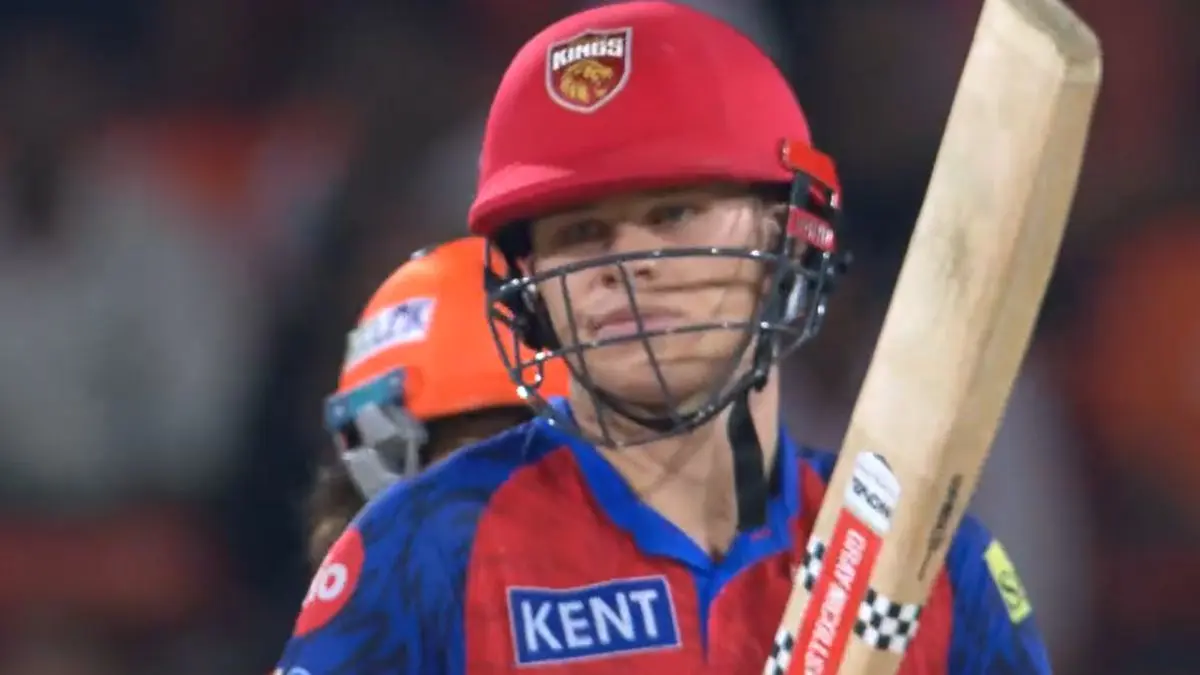
Connolly walked in when the asking rate was 13, with half the side back in the hut. He had no right to take the game this deep. But he played with a maturity beyond his years and a power that stunned the SRH bowlers.
-
Phase 1 (Rebuilding): For the first few overs, Connolly was cautious, rotating the strike with Suryansh Shegde. He understood that one more wicket would end the chase, so he kept the scoreboard ticking with ones and twos.
-
Phase 2 (The Attack): Once Shegde settled, Connolly opened up. He targeted the weak link in the SRH bowling—Hansh Dubey, the Impact Player. Dubey’s two overs went for 36 runs, with Connolly hitting him for three consecutive sixes over long-on. The young left-hander was using his reach to convert good length balls into half-volleys.
-
Phase 3 (The Shegde partnership): Suryansh Shegde played an able second fiddle. He scored 25 runs off 17 balls (1 four, 2 sixes) at a strike rate of 147.06. Together, Connolly and Shegde added 47 runs for the 5th wicket. They gave the home crowd a scare, pulling the required rate down to 11. The partnership was broken when Shegde tried to take on Pat Cummins deep in the innings, only to be caught by Abhishek Sharma. Score: 110/5 (11.4 overs).
The Late Order Fizzle
After Shegde’s wicket, Connolly continued the fight with Shashank Singh and Marco Jansen. Shashank hit one four (scoring 4 off 3) before being caught off Saib Hussian. Score: 119/6 (12.3 overs).
Then came the most crucial partnership of the innings. Marco Jansen (19 off 16, 1 six) showed uncharacteristic grit, staying with Connolly. They targeted Shivang Kumar and Malinga, adding 68 runs for the 7th wicket. The equation came down to 37 runs needed off the last two overs.
This is where the match was won.
The 19th over: Bowled by Shivang Kumar. With Connolly on strike, Kumar bowled a brilliant mix of wide yorkers and slow bouncers. Connolly, despite his brilliance, could only manage a single off the first three balls. Under pressure, Jansen swung hard and missed. On the 5th ball, Jansen finally connected, but he found Hansh Dubey on the boundary. Jansen out for 19. A new batter, Vijaykumar Vyshak, came in. Connolly took a single to keep the strike. Result of the over: 9 runs and 1 wicket. Required runs: 28 off 6 balls.
The 20th over: Pat Cummins bowled the final over. With 28 needed, Connolly needed six sixes. He managed a single off the first ball. Vyshak swung at everything but could only manage a single off the third ball. Connolly hit a glorious four off the fourth ball, but the game was up. He finished with a stunning 107 not out off 59 balls—an innings laced with 7 fours and 8 sixes, at a strike rate of 181.36—but he ran out of partners. PBKS finished at 202/7.
Key Performances and Where the Game Was Won
Top Batting Performances
-
Heinrich Klaasen (SRH): 69 off 43. The anchor and the accelerator. His presence allowed Kishan to play freely.
-
Ishan Kishan (SRH): 55 off 32. Proved his worth at number 3.
-
Cooper Connolly (PBKS): 107* off 59. One of the best centuries in a losing cause in IPL history. He hit the ball as cleanly as anyone on the night.
-
Travis Head (SRH): 38 off 19. Laid the foundation for the 235 total.
Top Bowling Performances
-
Pat Cummins (SRH): 4-0-34-2. Captain’s performance with the new ball, removing Aryan and effecting the run-out of Iyer (via catch). His economy of 8.50 was stellar.
-
Shivang Kumar (SRH): 4-0-45-2. Crucially broke the Connolly-Jansen partnership in the 19th over.
-
Arshdeep Singh (PBKS): 4-0-43-1. The only PBKS bowler who looked like taking a wicket without getting hit for 20 runs.
Impact Player Strategy
-
SRH: Used Piyush Aryan (batter) but he failed. However, their decision to bring in Hansh Dubey (bowler) backfired as he was expensive.
-
PBKS: Used Hansh Dubey as their Impact Player, but he was the weak link, going for 36 in 2 overs.
Conclusion: A Statement Win for SRH
Sunrisers Hyderabad’s 33-run victory was comprehensive. While the scoreboard suggests a close contest in terms of total runs (235 vs 202), the chase never really threatened the target after the 4/2 collapse. The game highlighted two critical aspects of modern T20 cricket:
-
Depth of batting: SRH’s ability to score 235 despite losing Head and Abhishek early in the powerplay shows their depth. Klaasen at 4, Reddy at 5 – they have six hitters.
-
The curse of the lone warrior: Cooper Connolly’s magnificent 107 proved that even a generational innings cannot win a game if the top order scores just 4 runs between them.
Turning Point of the Match: The 19th over bowled by Shivang Kumar. With Connolly on 99* and Jansen looking dangerous, Kumar conceded just 9 runs and took the wicket of Jansen. Had Jansen survived and Connolly faced the last over, the result might have been different. But on this night, the Sunrisers were simply too bright for the Kings.
Player of the Match: While Cooper Connolly made a compelling case in the losing effort, the award will likely go to Heinrich Klaasen for his 69 that propelled SRH to 235, or Pat Cummins for his captaincy and crucial 2/34. In our assessment, it’s Klaasen, whose 69 off 43 on a track where everyone else struggled for consistency was the difference between a par score and a winning score.
The win moves SRH further up the points table, while Punjab will need to regroup quickly. If they can get Connolly some support at the top of the order, they remain a dangerous side. But for now, Hyderabad celebrates a well-earned victory in the high-stakes theatre of the IPL 2026.
