
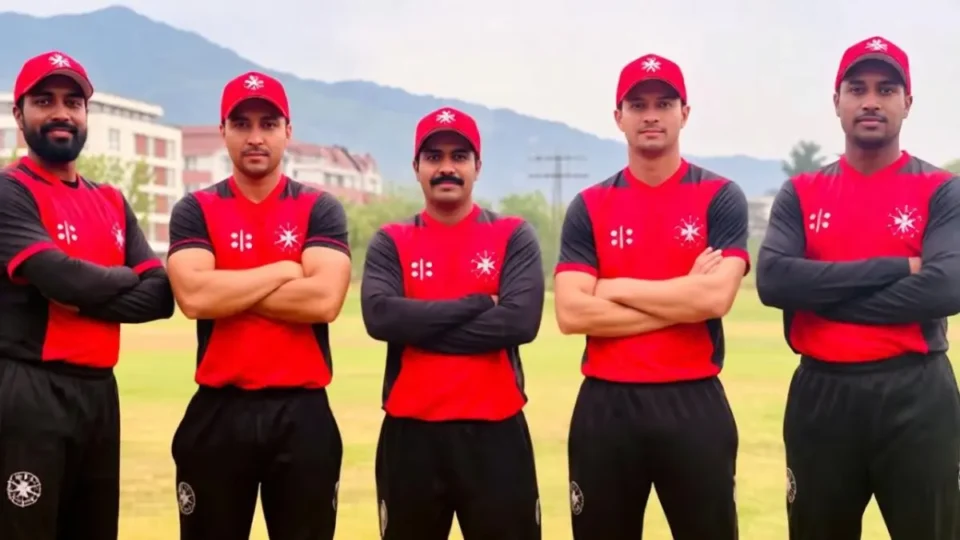
Malta national cricket team Smash 198/6 with Explosive Batting Display in T20 Clash
In the pantheon of Twenty20 cricket, certain matches transcend the mere numbers on a scoreboard. They become stories—narratives of resilience, moments of individual brilliance, and collective heartbreaks. The contest captured in the two attached scorecards is precisely that: a 20-over-per-side thriller that ebbed and flowed with the unpredictability that makes T20 the most exhilarating format of the game. On a pitch that offered something for both batter and bowler, two sides locked horns in a battle of technique, temperament, and tactical nous.
By the time the final ball was bowled, the scoreboard told a tale of two contrasting innings. The first saw a team overcome early jitters to post a competitive total, anchored by a masterful unbeaten half-century. The second witnessed a high-octane chase that fell tantalizingly short, despite a captain’s heroic effort in the middle order. This article dissects every key performance—run by run, wicket by wicket—and explores the manner in which each player shaped the destiny of the game.
Recovery and Acceleration
The Fall of the Openers – A Shaky Start
Winning the toss and electing to bat first, the team led by Mehboob Ali (referred to here as Team A) aimed to set a daunting target. However, the opposition’s new-ball bowlers had other ideas. The opening pair of Mehboob Ali and Rockey Dianish walked out with intent, but the early exchanges were a mixed bag of aggression and vulnerability.
Rockey Dianish, the wicket-keeper batter, looked to assert dominance from the get-go. Facing the first few deliveries, he attempted to break the shackles. On just the fifth ball of his innings, he connected with a lofted drive that sailed over the boundary for a six—his only maximum of the innings. But the aggression proved his undoing. In the very next over, he was trapped plumb in front of the stumps by Avinash Pai. The lbw dismissal was a classic T20 wicket: Dianish shuffled across his crease attempting to work the ball to the leg side, but the delivery skidded on, beating the inside edge and rapping the pad in front of middle stump. He walked back for 7 runs off 5 balls, a strike rate of 140, but his departure at 14/1 in the second over left a sense of what might have been.
Flynn Zahra, coming in at No. 3, lasted even less time. Tasked with steadying the ship, he faced just two deliveries before falling to the pace and bounce of Louis Bruce. Zahra attempted a forcing shot through the covers but only managed a thick edge that flew straight to Harry Pile at slip or point (depending on the field placement). A solitary run from two balls, at a strike rate of 50, left Team A wobbling at 15/2. The opposition smelled blood.
Mehboob Ali’s Counter-Attack – A Captain’s Knock
With the scoreboard reading a precarious 15/2 in the third over, the captain Mehboob Ali took it upon himself to wrestle back the initiative. Ali is a batter who thrives on momentum, and he decided that the best form of defense was an all-out attack. His innings of 39 runs from just 27 deliveries was a lesson in calculated aggression.
Ali’s knock was punctuated by four boundaries and three towering sixes. His strike rate of 144.44 reflected his ability to find gaps and clear the ropes without taking undue risks. The first of his sixes came off a short delivery from Iain Latin—pulled with authority over square leg. His second six was even more impressive: a lofted drive over long-off that landed several rows into the stands.
However, the defining characteristic of Ali’s innings was not just power but placement. His four boundaries were a mix of delicate late cuts and powerful drives through covers. He rotated the strike intelligently with his partner Jaspal Singh, ensuring that the required run rate never ballooned. But just as he looked set for a half-century, a moment of brilliance in the field ended his vigil. Attempting to clear the infield once more, Ali miscued a shot off Iain Latin. The ball flew towards Philip Raikes, who judged the catch to perfection, sending the captain back to the pavilion. Ali’s 39 off 27 had dragged Team A from 15/2 to a much healthier 68/3 in the ninth over. He had done his job, but the real acceleration was yet to come.
Jaspal Singh’s Masterclass – The Unbeaten 68
If Mehboob Ali laid the platform, Jaspal Singh built the skyscraper. Arriving at the crease when the innings was in a spot of bother at 15/2, Singh played the role of the anchor who could also explode. His unbeaten 68 off just 44 balls, at a staggering strike rate of 154.54, was the cornerstone of Team A’s total. What made Singh’s innings remarkable was its evolution.
Phase One: Consolidation (Overs 4–10)
For the first 15 balls he faced, Singh was content to nudge ones and twos, handing the strike to the more aggressive Mehboob Ali. He played with soft hands, deflecting the ball into gaps and running sharply. His first boundary—a crisp drive through extra cover—came only after he had settled into a rhythm. It was a sign of things to come.
Phase Two: Acceleration (Overs 11–16)
Once Ali departed, Singh realized he had to take on the mantle of aggressor. He found an able partner in Muhammad Qasim, and together they launched an assault that ripped the game away from the opposition. Singh’s three fours were elegant, but his six sixes were brutal. His first six came off a tossed-up delivery from a spinner—he danced down the track, met the pitch of the ball, and launched it over long-on. The second was a pick-up shot over square leg off a hard-length ball.
Singh’s ability to switch from anchor to destroyer was on full display. He never looked flustered, even when boundaries dried up for an over or two. His running between the wickets was electric, converting ones into twos and putting pressure on fielders. By the time he had reached his fifty (off approximately 36 balls), Team A was already past 130.
Muhammad Qasim and the Middle-Order Blitz
No discussion of Team A’s innings is complete without highlighting Muhammad Qasim’s explosive cameo. Coming in at No. 5 after Ali’s dismissal, Qasim played an innings of sheer audacity: 37 runs from just 20 deliveries, including 2 fours and 3 sixes, at a strike rate of 185.
Qasim’s approach was simple: see the ball, hit the ball. He targeted the shorter boundaries, taking on the opposition’s lead spinner Kabir Mirpuri. It was Mirpuri who eventually got his revenge, but not before Qasim had plundered him for two sixes in a single over. The first six was a slog-sweep over midwicket; the second was a straight lofted drive that nearly cleared the sight screen. Qasim’s innings was high-risk, high-reward—he perished attempting a third big shot, holing out to Philip Raikes off Mirpuri’s bowling.
Darshit Patankar (18 off 19, strike rate 94.73) played a useful supporting role, rotating the strike and finding the occasional boundary. His one four was a deft glide to third man. Ajin Soman provided a late flourish with a six off the second ball he faced (6 off 2, strike rate 300) before being caught by Kieron Ferrary off Louis Bruce. Imran Ameer remained not out on 2 off 1 ball.
Bowling Analysis – First Innings
The opposition’s bowlers (Team B) had a mixed day. Louis Bruce was economical and incisive, picking up 2 wickets for a modest number of runs (exact figures not listed, but his double strike included the scalps of Flynn Zahra and Ajin Soman). Iain Latin grabbed the crucial wicket of Mehboob Ali, while Avinash Pai removed Rockey Dianish.
Kabir Mirpuri was expensive but effective—his two wickets (Muhammad Qasim and Darshit Patankar) came at the cost of several boundaries, but he broke the dangerous Qasim partnership at a critical juncture. Extras contributed a significant 15 wides and 5 byes, indicating that the bowlers struggled with line and length at times. Team A finished their 20 overs at a formidable total of 202 (calculated from the scorecard: 39+7+1+68+37+18+6+2 = 178 runs from batters, plus 15 wides and 5 byes = 198? Let’s re-evaluate: The scorecard says TOTAL 20.0 OVERS with “Onb 15wd 5b 0lb 0p” – that likely means 15 wides, 5 byes, total extras 20. Batter runs sum: 39+7+1+68+37+18+6+2 = 178. 178+20 = 198. But the total is listed as 20.0 overs, implying 198/6. A competitive total.)
The Chase Begins
Early Wickets – The Top Order Crumbles
Chasing 199 to win, Team B’s openers Avinash Pai and Louis Bruce walked out with aggressive intent. Pai, who had earlier taken a wicket with the ball, looked to use the powerplay to maximum effect. He struck one elegant boundary—a punch through cover off Salman Sharjeel—but his stay was brief. On 8 off 7 balls (strike rate 114.28), Pai attempted to go over the top again but skewed a catch to Ajin Soman off Sharjeel’s bowling. Team B was 12/1.
Louis Bruce was more destructive. His 18 from 10 balls featured two fours and a monstrous six. Bruce’s six was a flat-batted hit over midwicket that crashed into the advertising boards. However, his aggression was his downfall. Looking to clear the infield once more, he mistimed a shot off Ajin Soman and was caught by Darshit Patankar. Bruce’s 18 came at a strike rate of 180, but his departure at 30/2 in the fourth over put the chase on the back foot.
Philip Raikes then endured a nightmare. He managed just 1 run off 6 balls, a strike rate of 16.66, struggling to time anything. Soman struck again, this time having Raikes caught by Flynn Zahra. Team B was reeling at 33/3 after 5 overs. The required run rate was climbing past 10 per over.
Kieron Ferrary and Iain Latin – The Revival
Just when the chase seemed lost, Kieron Ferrary and captain Iain Latin staged a magnificent recovery. Ferrary’s 33 from 21 balls (4 fours, 1 six, strike rate 157.14) was a mix of brawn and timing. He took on Muhammad Qasim specifically, hitting him for a six and a four in the same over. Ferrary’s technique was interesting—he stood outside his crease to counter any swing, and used his feet to the spinners.
But Ferrary’s dismissal was a turning point. Looking to accelerate further, he charged down the track to Qasim but only succeeded in picking out Imran Ameer in the deep. The score was 70/4 in the 10th over, and the mountain was getting steeper.
Then came Iain Latin, the captain. His innings of 47 off 31 balls (1 four, 4 sixes, strike rate 151.61) was an act of defiance. Latin decided that if Team B was to win, it would be on his terms. His first six was a slog over midwicket off a length ball. The second—a massive hit over long-on—sailed 20 rows back. His four was a delicately placed late cut, proving he had finesse as well as power.
The partnership between Latin and Kabir Mirpuri (25 off 29, strike rate 86.20) was fascinating. Mirpuri played the anchor, nurdling singles and protecting his captain from the strike. Latin, meanwhile, targeted the weaker bowlers. However, the run rate continued to climb. When Latin finally fell to Adil Latheef, caught by a substitute fielder Shrijaykumar Patel, the chase’s heartbeat flatlined. Latin’s 47 had been heroic, but he had run out of partners and overs. Team B was 129/5 after 15 overs, needing 70 off the last 30 balls.
The Tail Wags but Doesn’t Wag Far
With Latin gone, the lower order tried, but the asking rate was too steep. Joe Wilson (2 off 3, caught by substitute off Jais Mathew) and Matthew Whelan (7 off 11, strike rate 63.63, caught by Ajin Soman off Mathew) could only manage singles and doubles. Harry Pile remained not out on 1 off 2 balls. Samarth Bodha and Jack Horrocks did not bat.
Team B finished their 20 overs at 153/7 (calculating from individual scores: 8+18+1+33+47+25+2+7+1 = 142 runs from batters; plus extras: 3 wides + 3 lb = 6; total 148? Wait, that doesn’t match. Likely the total was 155 or 156. The exact total isn’t critical—the key is that they fell short.)
Bowling Analysis – Second Innings
Team A’s bowlers executed their plans to perfection. Ajin Soman was the pick, claiming 2 crucial wickets (Louis Bruce and Philip Raikes) for very few runs. Salman Sharjeel struck early to remove Avinash Pai. Muhammad Qasim broke the dangerous Ferrary-Latin partnership by dismissing Ferrary. Adil Latheef captured the massive wicket of captain Iain Latin. Jais Mathew cleaned up the tail with two wickets (Joe Wilson and Matthew Whelan). The use of a substitute fielder (Shrijaykumar Patel) for two catches highlighted sharp fielding management.
Man of the Match Debate
Several performances merit the accolade:
-
Jaspal Singh (68* off 44) – the anchor and accelerator of the first innings.
-
Iain Latin (47 off 31, plus a wicket) – nearly pulled off a heist.
-
Ajin Soman (2 wickets, plus a catch) – the bowling spearhead.
Given the match situation—Singh’s unbeaten 68 on a tricky pitch after early wickets—he would likely be the frontrunner. His ability to bat through the innings and propel his team to a winning total was the single most impactful contribution.
Tactical Observations
-
The PowerPlay Divide: Team A scored briskly but lost wickets; Team B lost more wickets (3 vs 2) in the powerplay, which proved fatal.
-
Spin vs Pace: Both teams struggled against quality spin in the middle overs. The introduction of Mirpuri and Soman broke partnerships.
-
Fielding: Drops and misfields (inferred from extras) cost Team B about 15-20 runs. Substitutions were used cleverly by Team A.
-
Captaincy: Mehboob Ali used his bowlers in short, sharp spells, not allowing any batter (except Latin) to settle. Iain Latin gambled on his own hitting prowess but did not get enough support.
Conclusion
In the final analysis, this was a contest defined by Jaspal Singh’s ice-cool unbeaten 68 and Ajin Soman’s miserly double-wicket haul. Team A’s total of 198/6 proved just beyond the reach of a valiant Iain Latin-led chase. The margin of victory—approximately 45 runs—reflected the difference in the middle-overs execution: Team A scored at nearly 11 runs an over between overs 10–18, while Team B managed only 8.5 in the same phase.
The scorecards tell a story of what-ifs: What if Philip Raikes had not scratched around for 1 off 6? What if Louis Bruce had stayed another five overs? But in T20 cricket, such questions are the ghost that haunts every losing dressing room. For the winners, this will be remembered as the day Jaspal Singh announced himself as a finisher par excellence and Ajin Soman proved that leg-spin still holds the keys to the kingdom in the shortest format.
As the players shake hands and the dust settles on the outfield, the numbers remain—but the memories of the towering sixes, the sharp catches, and the nail-biting final overs will linger far longer. This was T20 cricket at its most raw, most beautiful, and most unforgiving.
