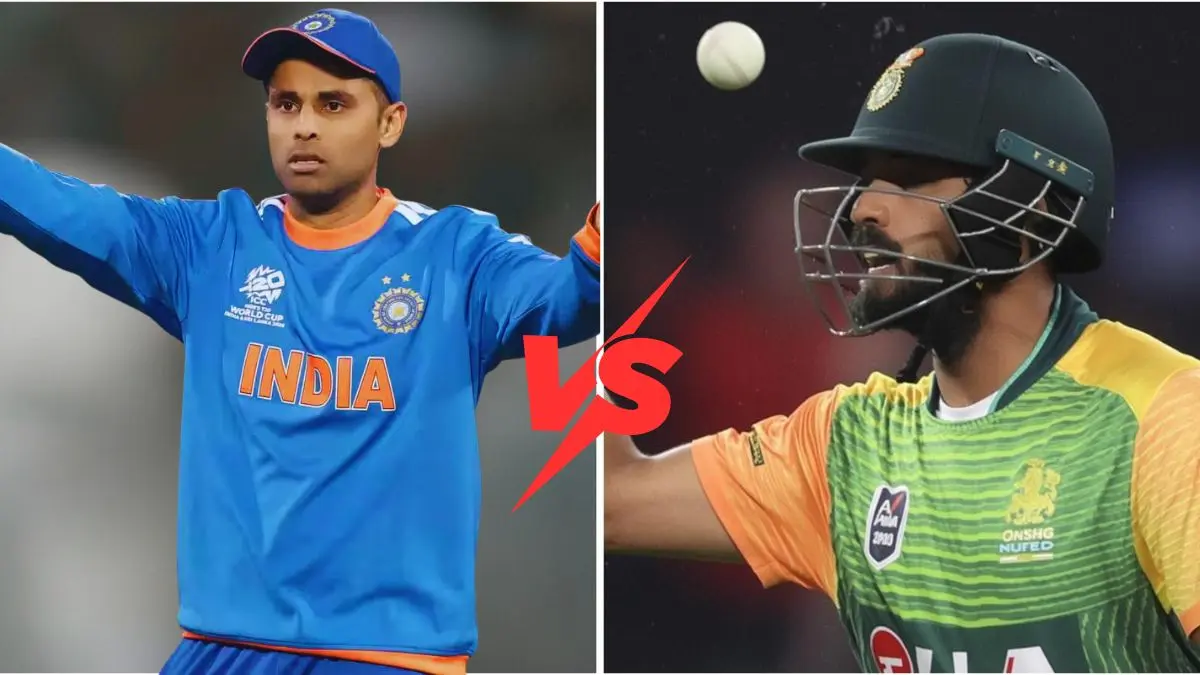
India national cricket team vs Netherlands national cricket team T20 World Cup 2026: Match Preview, Pitch Report & Prediction
The T20 World Cup 2026 clash between India and the Netherlands promises an exciting mix of powerhouse cricket and fearless underdog spirit. On paper, India enters as overwhelming favorites, but T20 cricket is famous for surprises, momentum swings, and individual brilliance. This match is more than a group-stage fixture — it is a showcase of depth, tactics, and modern T20 strategy.
Below is a complete match preview including squads, player analysis, venue breakdown, pitch report, tactical matchups, and prediction.
Match Overview
India comes into the tournament with one of the strongest white-ball squads in world cricket. Their lineup combines explosive batting, elite fast bowling, and world-class spin options. The Netherlands, meanwhile, continues to grow as a competitive associate nation capable of challenging bigger teams with disciplined cricket and fearless intent.
Key themes of the match:
-
India’s batting depth vs Netherlands’ disciplined bowling
-
Spin battle in middle overs
-
Powerplay dominance
-
Fielding intensity
-
Death overs execution
India Squad – Strength, Balance & Match-Winners
India’s squad is packed with multi-dimensional cricketers who can change games in a matter of overs.
Batting Core
India’s top order is designed for aggression:
-
Suryakumar Yadav (Captain) – 360-degree shot maker and tempo controller
-
Sanju Samson – attacking wicketkeeper-batter
-
Ishan Kishan – left-handed power option
-
Rinku Singh – finisher with calm temperament
-
Tilak Varma – stylish middle-order stabilizer
-
Abhishek Sharma – attacking top-order option
India’s batting philosophy is clear: attack early, maintain pressure, and explode at the death.
All-Round Strength
-
Hardik Pandya – pace-bowling all-rounder and match finisher
-
Axar Patel – spin + lower-order hitting
-
Washington Sundar – control bowler and tactical batter
-
Shivam Dube – power hitter and medium pace
These players allow India to play deep batting while maintaining bowling variety.
Bowling Arsenal
India’s bowling is among the most complete in the tournament:
-
Jasprit Bumrah – elite death overs specialist
-
Mohammed Siraj – powerplay strike bowler
-
Kuldeep Yadav – wrist spin wicket taker
-
Varun Chakravarthy – mystery spin option
-
Arshdeep Singh – left-arm angle and swing
India can attack with pace, spin, and variations in every phase.

Netherlands Squad – Discipline, Skill & Fearless Cricket
The Netherlands relies on team structure, fielding excellence, and tactical intelligence.
Batting Unit
-
Scott Edwards (Captain/WK) – anchor and game manager
-
Max O’Dowd – technically sound opener
-
Bas de Leede – aggressive middle-order all-rounder
-
Colin Ackermann – experienced stabilizer
-
Michael Levitt – emerging batting talent
-
Noah Croes – dynamic stroke maker
The Dutch batting strategy is about rotating strike, minimizing collapses, and targeting specific bowlers.
All-Round Contributions
-
Roelof van der Merwe – veteran T20 specialist
-
Logan van Beek – seam-bowling all-rounder
-
Saqib Zulfiqar – spin + late hitting
Their flexibility allows them to adapt to match situations.
Bowling Attack
-
Paul van Meekeren – aggressive fast bowler
-
Fred Klaassen – left-arm seam variation
-
Tim van der Gugten – pace and bounce
-
Aryan Dutt – off-spin control
-
Kyle Klein – seam option
Netherlands thrives on disciplined lines and smart field settings.
Venue & Conditions
The match venue is expected to favor balanced cricket — offering assistance to both batters and bowlers depending on conditions.
Ground Characteristics
-
True bounce early
-
Slight grip for spinners later
-
Fast outfield
-
Short square boundaries
-
Dew factor in night matches
Captains winning the toss may prefer chasing due to dew.
Pitch Report
The surface is expected to be:
-
Flat with consistent carry
-
Good for stroke play in the powerplay
-
Slower in middle overs
-
Spin-friendly after 10 overs
-
Favorable to cutters and variations
Expected First Innings Score
-
Competitive total: 165–185
-
Par score: 175
-
Chasing advantage if dew sets in
Spinners who vary pace will be extremely effective.
Tactical Matchups
India’s Powerplay vs Dutch New Ball
If India’s openers dominate early, the match could quickly tilt. Netherlands must:
-
Bowl tight lines
-
Avoid wides
-
Attack stumps
-
Use swing early
Middle Overs Spin Battle
India’s spin trio could suffocate Dutch batters. Netherlands must:
-
Rotate strike aggressively
-
Avoid dot-ball pressure
-
Target weaker fielders
-
Sweep and reverse sweep
Death Overs Showdown
India’s finishing strength is a major advantage. Bumrah vs Dutch hitters will be decisive.
Key Players to Watch
India
-
Suryakumar Yadav – tempo controller
-
Hardik Pandya – clutch overs
-
Jasprit Bumrah – death overs execution
-
Kuldeep Yadav – middle overs strike bowler
Netherlands
-
Scott Edwards – batting anchor
-
Bas de Leede – all-round impact
-
Paul van Meekeren – new-ball threat
-
Roelof van der Merwe – experience under pressure
Game Scenarios
Scenario 1: India Bat First
If India posts 180+, pressure shifts heavily to Netherlands. Dutch batters must play fearless cricket.
Scenario 2: Netherlands Bat First
Netherlands must aim for 160+ with wickets in hand. Anything under 150 gives India total control.
Scenario 3: Spin Dominates
If pitch slows early, the match becomes tactical. Netherlands gains a better chance in low-scoring contests.
Strength Comparison
| Area | Advantage |
|---|---|
| Batting depth | India |
| Bowling variety | India |
| Fielding | Equal |
| Experience | India |
| Team discipline | Netherlands |
| Spin options | India |
| Death overs | India |
Winning Strategy
India Must
-
Attack powerplay
-
Use spin chokehold
-
Finish strong
-
Field aggressively
Netherlands Must
-
Take early wickets
-
Slow scoring rate
-
Bat deep
-
Target weaker bowlers
Prediction
India enters as heavy favorites due to squad depth, elite bowling, and explosive batting. However, T20 cricket rewards bold decisions and fearless execution.
Prediction: India likely to win, but Netherlands can compete if they control powerplay and middle overs.
Expected margin:
India win by 25–40 runs or 6–8 wickets.
Historical Context of the Fixture
India and the Netherlands have met only a handful of times in global tournaments, but every encounter has carried a unique narrative. For India, matches against emerging cricket nations are about maintaining dominance, testing bench strength, and refining tournament strategy. For the Netherlands, such fixtures are opportunities to showcase growth, discipline, and fearless cricket on the biggest stage.
T20 World Cups have often produced memorable upsets. Associate teams have stunned giants before, and that knowledge alone adds tension to this contest. India cannot afford complacency, while the Netherlands enters with nothing to lose — a dangerous mindset in T20 cricket.
The psychological dynamic is fascinating:
-
India carries expectation
-
Netherlands carries freedom
-
Pressure favors the underdog
-
Momentum favors the favorite
That contrast creates a compelling tactical battle.
India’s Tactical Blueprint
India’s modern T20 strategy is built on calculated aggression. The team no longer relies on conservative accumulation. Instead, it focuses on:
-
Powerplay dominance
-
Boundary percentage
-
Flexible batting order
-
Spin choke in middle overs
-
Precision at the death
Powerplay Philosophy
India aims to score 55–70 runs in the first six overs. Even losing one or two wickets is acceptable if the scoring rate remains high. This aggressive intent forces opposition captains into defensive field placements early.
Middle Overs Control
This is where India suffocates opponents. Wrist spin and finger spin options create constant wicket-taking pressure. The field closes in, dot balls pile up, and panic leads to mistakes.
Death Overs Execution
India’s finishing approach is surgical:
-
Yorkers
-
slower balls
-
wide lines
-
boundary protection
Bumrah’s presence alone shifts the balance in tight finishes.
Netherlands Tactical Blueprint
The Netherlands thrives on structure rather than star power. Their success depends on:
-
Smart bowling changes
-
Elite fielding energy
-
Running between wickets
-
Minimizing collapses
-
Targeted aggression
Controlled Powerplay
Instead of chasing early domination, the Netherlands aims to stay alive in the first six overs. If they restrict India under 50 in the powerplay, the pressure flips.
Strike Rotation
Dutch batters excel at rotating strike. They rely less on six-hitting and more on smart placement. This frustrates bowlers and prevents scoreboard stagnation.
Bowling Discipline
Their bowling is built on patience. They rarely chase wickets recklessly. Instead, they:
-
Bowl into the pitch
-
Protect boundaries
-
Force risky shots
-
Wait for mistakes
This approach works especially well on slower surfaces.
Player Battles That Could Decide the Match
Suryakumar vs Dutch Spin
If Netherlands’ spinners fail to contain him, India could explode past 190. His ability to access unconventional angles makes traditional field settings ineffective.
Bumrah vs Dutch Finishers
The final overs will test the Netherlands’ temperament. Bumrah’s variations demand perfect timing. Even elite hitters struggle to predict his release.
Bas de Leede vs Indian Wrist Spin
He is the Netherlands’ X-factor. If he survives the spin phase, the Dutch innings gains momentum and belief.
Hardik Pandya vs Middle Overs Pressure
Pandya’s ability to counterattack after a wicket is crucial. His innings often determine whether India posts a good total or a match-winning one.
Fielding Impact
T20 matches are increasingly decided by fielding margins:
-
Run-out chances
-
boundary saves
-
catching under pressure
-
relay throws
-
athletic dives
India’s athleticism has improved dramatically in recent years. However, the Netherlands is known for sharp, disciplined fielding. A single dropped catch could swing momentum.
Expect high-intensity fielding contests.
Mental Pressure & Tournament Context
Group-stage matches often define tournament momentum. A dominant win boosts net run rate and confidence. A narrow escape exposes weaknesses.
India’s challenge:
-
Avoid overconfidence
-
Protect key players
-
Build winning rhythm
Netherlands’ challenge:
-
Stay fearless
-
Extend the contest deep
-
Force pressure moments
If the game reaches the final three overs with a close equation, psychological strength becomes more important than skill.
Possible Playing XIs
India (Probable XI)
-
Ishan Kishan
-
Abhishek Sharma
-
Suryakumar Yadav (C)
-
Tilak Varma
-
Hardik Pandya
-
Rinku Singh
-
Washington Sundar
-
Axar Patel
-
Jasprit Bumrah
-
Kuldeep Yadav
-
Mohammed Siraj
Impact options: Shivam Dube / Arshdeep Singh
Netherlands (Probable XI)
-
Max O’Dowd
-
Michael Levitt
-
Scott Edwards (C/WK)
-
Colin Ackermann
-
Bas de Leede
-
Noah Croes
-
Roelof van der Merwe
-
Logan van Beek
-
Paul van Meekeren
-
Fred Klaassen
-
Aryan Dutt
Impact option: Tim van der Gugten
Match Flow Prediction
First Innings Projection
India batting first: 175–195
Netherlands batting first: 145–165
Chase Dynamics
-
India chasing 160 = strong favorite
-
Netherlands chasing 180+ = high risk
-
Low-scoring pitch = upset chance increases
Weather Factor
Clear skies are expected, but humidity could influence dew formation. Dew benefits chasing teams by:
-
reducing spin grip
-
flattening bounce
-
easing stroke play
-
making yorkers slippery
Captains will watch conditions closely at the toss.
Crowd & Atmosphere
India enjoys massive crowd support worldwide. Even neutral venues feel like home games. Crowd noise:
-
energizes Indian players
-
increases Dutch pressure
-
amplifies big moments
-
influences momentum swings
However, associate teams often thrive in hostile atmospheres because expectations are lower.
Statistical Edge
India leads in:
-
T20 win percentage
-
batting strike rate
-
bowling economy
-
ICC tournament experience
Netherlands leads in:
-
underdog resilience
-
adaptability
-
pressure freedom
Statistics favor India, but T20 cricket rarely follows spreadsheets.
Final Prediction (Extended)
India’s depth, experience, and firepower make them overwhelming favorites. The Netherlands will fight hard, especially in the field and middle overs, but sustaining pressure for 40 overs against India is extremely difficult.
Final call: India wins comfortably unless early wickets create chaos.
Predicted result range:
-
India win by 30+ runs
OR -
India win by 6+ wickets
Upset probability: 10–15%